

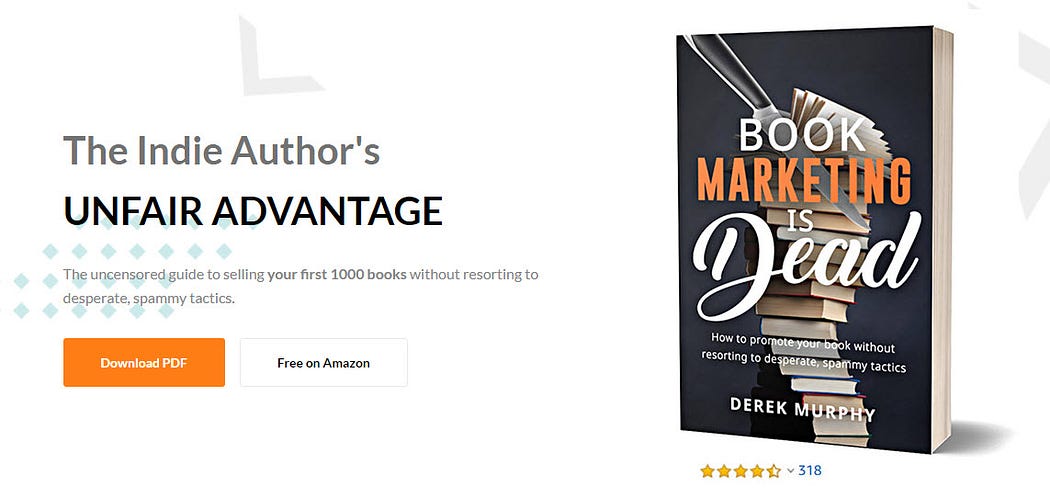
This is the preface to my revised book marketing guide, download the free PDF.
Book formatting is the bane of my existence. It’s tedious, and time-consuming, and there are always typos and mistakes, but it’s also a crucial part of the publishing process. That said, it’s possible to do a decent job yourself, if you learn how, and there are even some online tools that make it all a bit easier.
Get the free formatting templates
Want to try a template before working through the tutorials? Start with one of these existing downloads:
Just Word: Download the Word sample (.docx, about 32 KB). It contains sample text and a 6 × 9 inch page layout. Save a separate working copy before replacing the text.
Word and InDesign: Download the five-template sample pack (.zip, about 24.7 MB). It includes five template sets, Word files (.docx and .doc), InDesign files (.indd), sample PDFs, a welcome guide and a font guide. Extract the ZIP before opening a template. These are editable starting points, not finished files for your own book.
The tutorials below explain the process; the links above go directly to the files. See what to open and what to check first.
Book formatting is rarely part of the sales event, but it may have an effect on reader enjoyment or satisfaction. Ebooks are generally very simple, less is definitely more: ebook text is flowable and readers are allowed to change the font or text size, so you won’t be able to control something things like spacing between words or where lines or chapters end up. With print formatting, I would make an effort to keep it clean and professional, and add all the common, standard book publishing elements and practices even if you don’t understand what they’re all for.
A poorly formatted book or ebook can lead to bad reviews that will sabotage all your marketing efforts, so set aside some time to grapple with the learning curve, buy a tool, or outsource it.
I learned to format ebooks from scratch, converting Word to clean HTML and then editing in Sigil. But it’s a pain. You can use Calibre to make free ebook files but you don’t have as much design control and the code can be buggy. Ebooks should be clean and functional, so don’t get carried away on design or fonts or images… just make sure people can read it.
I was excited to try Vellum to make ebooks but it’s just for Mac. You can skip the whole process by using Smashwords or BookBaby; Draft2Digital and Reedsy both have online ebook formatting tools that work well. Unfortunately there still isn’t a simple, universal, excellent way to format an ebook quickly, despite multiple attempts. I usually format in Word — which has to be done right, with heading tags for chapters — and then use the free ebook converter tool on www.PublishXpress.com.
If you get stuck, you can also find someone cheap to help you format or convert to ebook on fiverr.com (I’m going to reference fiverr.com a dozen times in this book, but be aware the quality is often basic or unreliable.)
Your print book is a little harder. You can format your book in MS Word, but it can be really challenging to get everything done right. Seriously, there are memes about it.
Having it done in Adobe InDesign will cost more, but the text and everything will look a little more professional. Do the best you can, but if you do it yourself, be aware that it could probably look better.
Book design & formatting templates

I put together some free templates in Word and InDesign, along with guides and training material at DIYbookformats.com. That page is the Word tutorial; use the direct download links above for the files, then follow the guides as you customize your book.
Open a template and try one chapter
1. Choose the right file. In the five-template pack, open 5minimal_templatesNEW/START HERE.pdf first. For the first Word design, use minimal_temp1/minimal1.docx inside that folder. The other four designs follow the same folder pattern. For InDesign, use the minimal_temp1/minimal_temp1.indd file (or another design’s .indd file) in a compatible version of Adobe InDesign. The PDFs show sample layouts; they are not editable manuscript templates.
2. Make a copy and replace a small section first. Test your title and one chapter before moving the whole manuscript. The Word samples use a 6 × 9 inch page size; check that against the trim size you intend to publish. Keep an untouched copy so you can compare the layout if something moves.
3. Remove the sample book. Replace the title, author, subtitle, copyright details, ISBN placeholders and sample chapter text. Check headers, footers, contents and any notes left in the template. Refresh the table of contents after editing, then check its entries against your actual chapters.
4. Check fonts and page breaks. Missing fonts or substitutions can change the layout. Use fonts you have permission to use and review the result on your own computer. If you get stuck with spacing or chapter breaks, work through the Word formatting guide and the getting-started resources before replacing more text.
Check print and ebook files separately
For print, review the final file for your chosen printer’s requirements, including trim size, margins, page numbering and chapter starts. The sample PDFs in the ZIP show the sample book, not a proof of your manuscript. A template does not guarantee a publication-ready result.
For a reflowable ebook, check chapter navigation and the reading order as well as how the text looks at different font sizes. The free ZIP does not include EPUB files. The ebook conversion page currently accepts Word .doc or .docx files, not PDFs; review the converted result before publishing. A print layout and an ebook need different checks.
If you need more help
The welcome guide describes these free templates as guides and says they are unsupported. Start with the free tutorials linked above. If you prefer guided lessons, you can see the book-formatting course. Check the current course page for its contents and requirements; Word and InDesign lessons require the relevant software. If you already bought a course or bundle, check your existing course dashboard before purchasing again.
Update: I’ve given in, after years of avoidance; Vellum just makes book formatting so much easier. I started playing around with the Macincloud option (you can *rent* a Mac device and use Vellum on your PC; I used it to format this book). Now I’m planning to buy a new Macbook as a writing and book formatting device. You can see my Vellum review here.
If you’re determined to format yourself in Microsoft Word…
You should also check out these book formatting templates from The Book Designer.

Best Fonts for Book Design
I’m also in the process redesigning my online cover tool and have hundreds of new and exciting fonts to share with you in the next batch of templates and resources. But in the meantime, check out my post on the 300+ best book cover design fonts for every genre.
Grab my free book marketing guide; download the full book and learn how to launch a bestseller.

I’ve spent 15 years helping authors write, publish, and sell books. When I’m not writing, I’m probably in a castle somewhere with cats.

Add Comment