
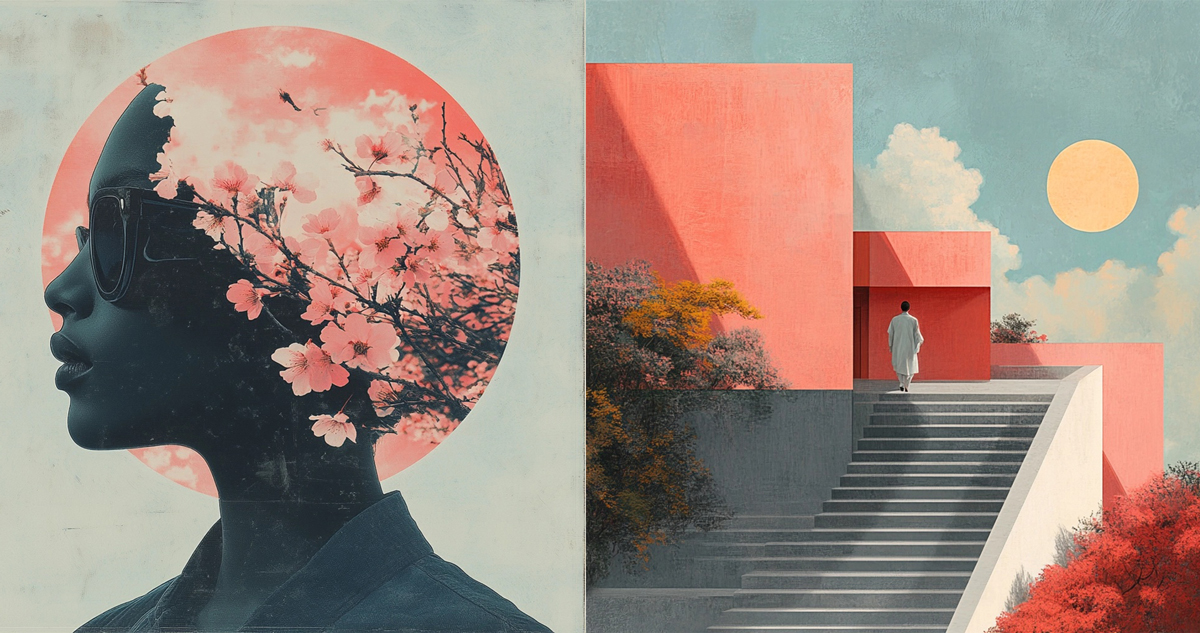
We’re overworked, under-resourced, and running on empty while the world demands more and more. No wonder we need new language for the new emotions and shared experiences we can barely describe.
These are feelings people may be experiencing, and feelings are valid—and no amount of logic or dismissive commentary can explain them away. The emotions we’re grappling with today aren’t just a case of mild ennui, that sense when life is fine but missing joy or zest, lacking that je ne sais quoi. No, this is something heavier, more pervasive, and more hopeless… grounded in an inhospitable reality where the line between dreams and delusions are unpredictable.
So, I decided to build this collection—a glossary of feelings paired with haikus for reflection. Because these terms aren’t just buzzwords; they’re the emotional pulse of our generation. And sometimes, naming what we’re feeling is the first step toward understanding it.
This glossary isn’t just a collection of trendy terms—it’s a map of modern survival. These moods, vibes, and aesthetics aren’t trivial; they’re signposts in a world that feels like it’s spinning out of control. They’re reflections of anxiety, resistance, and resilience. And they deserve acknowledgment.
A “haiku” is a traditional Japanese poetic form that captures a fleeting moment, emotion, or observation in just 17 syllables, arranged in a 5-7-5 pattern—forcing the writer to distill complex feelings into a tiny, vivid snapshot. It’s a useful creative exercise to express feelings within a constrained fixed formula; a word puzzle that allows your creative and analytical brain to conspire together for holistic mindfulness.
They are meant to spoken and savored. Share the one that resonates with you the most, or write it in your journal for daily reflection.
1. Bed Rotting
Silent sheets embrace,
The world spins outside my reach,
Here, I find my peace.
Curtains drawn, lights dim,
A refuge from endless noise,
The bed holds my soul.
Dreams of stillness hum,
Time unwinds, the clock forgets,
Rotting feels like rest.
Bed rotting is more than just staying in bed—it’s a rebellion. In a world that demands endless productivity, bed rotting is the art of doing absolutely nothing and unapologetically loving it. It’s about retreating into the comfort of your bed, shutting out the noise of the world, and allowing yourself to exist without performing.
2. Doomscrolling
Endless headlines scream,
Tomorrow’s fears in my palm—
Sleep becomes a dream.
The screen pulls me in,
Each swipe digs deeper within.
Can’t stop; must know more.
Eyes burn with the glow,
Truth or chaos, I can’t tell.
The void watches back.
Doomscrolling is the addictive ritual of endlessly consuming bad news online, even when it leaves you anxious and miserable. It’s the modern equivalent of staring into the abyss, except the abyss is a curated feed of global catastrophes. Breaking the cycle isn’t easy, but recognizing it is the first step.
3. Goblin Mode
Blanket cave protects,
Snacks within arm’s reach—pure bliss.
Goblin, leave me be.
Unbrushed hair, bare feet,
Laundry piles, dishes ignored.
I’m thriving in sloth.
Chaos is my calm,
Pajamas my armor now.
Who needs the outside?
Goblin mode celebrates the joy of unapologetic self-indulgence and low-effort living. Think: wearing pajamas all day, eating snacks in bed, and refusing to care about societal expectations. It’s not about laziness—it’s about survival and embracing comfort in a world that constantly demands more.
4. Quiet Quitting
No longer your pawn,
Work ends when my time does too.
Boundaries build peace.
Emails left unread,
I clock out, reclaim my life.
The rebel stands still.
My worth isn’t here,
Measured in deadlines unmet.
I am more than work.
Quiet quitting isn’t about leaving your job—it’s about leaving behind the toxic grind of overwork. By doing only what’s required, it’s a rebellion against burnout culture and a way to reclaim time, energy, and mental health without burning bridges.
5. The Algorithm
It predicts my soul,
Serves me ads I never asked—
How does it know me?
Patterns seen in code,
Echoes of my deepest self.
Data wears my mask.
This digital brain,
A reflection, warped and bright.
Friend or foe? Not sure.
The algorithm is the invisible force shaping what we see and engage with online. It curates content based on our clicks and preferences, creating an echo chamber that can feel simultaneously addictive and suffocating. It’s both a tool and a trap, knowing us better than we know ourselves—or so it seems.
6. Delulu
Dreams too sweet to leave,
In my world, I am the star.
Let me live this lie.
Castles in my mind,
Built from stardust, dreams, and hope.
Reality fades.
What’s delusion, friend,
But an escape from the pain?
I’ll stay in my glow.
“Delulu,” short for delusional, is the joyful celebration of living in your own fantasy world. It’s about ignoring reality, embracing your dreams, and daring to believe in something impossible. In a world full of harsh truths, it’s a comforting escape.
7. Soft Life
Ease whispers my name,
Gentle mornings, softer nights—
Hustle fades to ash.
Slow sips, warmth in hand,
The world can wait for my joy.
Softness is my shield.
Luxury in breath,
Rejecting the constant grind.
I choose peace, not stress.
The soft life rejects the grind and celebrates ease, comfort, and joy. It’s about stepping away from hustle culture to focus on simplicity and self-care. While often aspirational, it’s a reminder that success doesn’t have to mean exhaustion.
8. Parasocial Relationships
A stranger’s voice soothes,
Through the screen, I find a friend.
Do they know my name?
Connection through glass,
One-sided yet comforting.
Loneliness recedes.
They’ll never know me,
Yet their laughter feels so real.
Intimacy feigned.
Parasocial relationships are one-sided emotional bonds with influencers, celebrities, or fictional characters. They provide comfort and connection in a disconnected world but can blur the line between admiration and obsession.
9. Mask Fishing
Layers hide my face,
A performance, never real.
Will you see me now?
Smiles that don’t belong,
Eyes that dart, searching for cues.
The mask cracks, I breathe.
This is not my skin,
But I wear it every day.
A mask, not a life.
Originally about makeup that conceals flaws, mask fishing has become a metaphor for hiding your true self. It’s the exhausting act of pretending to fit in, often to meet societal expectations, and it comes at a high emotional cost.
10. Rage Quitting
Frustration ignites,
The desk slams, the door slams too.
Freedom tastes like fire.
No more can I stand,
Their rules, their chains, their demands.
I walk out, alive.
Goodbye, petty norms.
Meltdown turned rebellion now.
I am done with this.
Rage quitting isn’t just for gamers—it’s the dramatic exit from a toxic job, relationship, or situation when frustration hits a breaking point. While impulsive, it’s sometimes the only way to reclaim agency and protect your mental health.


11. Girl Math/Boy Math
Shoes cost nothing when
Broken down by daily use.
Math becomes my muse.
Value shifts with mood,
Numbers bend to justify.
I am the equation.
Autist math reigns true—
Logic cuts through all the noise.
Feelings don’t compute.
This playful trend highlights the quirky, emotional logic we use to justify decisions—like how a sale makes spending money feel like saving money. It’s relatable humor about the mental gymnastics we all perform to make life make sense.
12. Shadow Work
Mirror shows my flaws,
The shadow calls me deeper.
Do I dare look in?
Beneath the bright smile,
Old wounds fester, hidden well.
Truth is where it heals.
In the darkness, light—
Lessons from my buried self.
The shadow becomes.
Shadow work is the introspective journey of facing your hidden fears, insecurities, and flaws. It’s not easy, but it’s transformative—a path toward self-acceptance and understanding the parts of yourself you’ve been taught to hide.
13. Chronically Online
Life lived through the screen,
Tabs open on every dream.
Offline feels like death.
Memes replace my words,
Reality fades to dust.
I scroll to belong.
Too much yet too few—
Voices crowd my empty room.
I yearn for silence.
Being chronically online means living so immersed in internet culture that it becomes your primary reality. It’s a double-edged sword—an endless escape into memes and rabbit holes, but also a potential source of isolation and burnout.
14. NPC Energy
I am background noise,
Walking paths I never chose.
Do you see me here?
Scripted lines repeat,
Yet I long to go off-book.
NPCs can dream.
Othered yet unseen,
In your world, I am nothing.
Mine, I am the star.
Non-Player Character (NPC) energy describes feeling like a background character in other people’s stories. It’s about navigating life without agency, going through the motions while wondering if you’ll ever be the hero of your own narrative.
15. Toxic Productivity
Hustle wears me down,
Never enough for their goals.
I lose all my time.
Work becomes my cage,
Freedom traded for their gain.
Burnout claims my soul.
Slow down, breathe, let go.
Productivity’s a lie.
Rest is rebellion.
Toxic productivity is the obsession with overworking to the point where rest feels like failure. It glorifies burnout and turns life into a relentless grind. The antidote? Redefining success and learning to embrace downtime.
16. Hyperfixation
Hours disappear,
One obsession fuels my world.
I forget to eat.
Details pull me in,
Every piece a masterpiece.
This is joy, uncut.
Let me lose myself,
In this passion, pure and bright.
Hyperfocus reigns.
Hyperfixation is the intense focus on a specific interest or activity that makes the rest of the world disappear. While it can lead to incredible creativity and insight, it’s easy to lose track of time and priorities in its grip.
17. Decision Fatigue
Choices drown my mind,
Every path a heavy weight.
Paralysis wins.
Too much, too many—
Simplify, remove the noise.
Just choose for me, please.
Infinite pathways,
I stumble, caught in the web.
Less is more today.
Decision fatigue is the mental exhaustion from making too many choices. When even picking what to eat feels impossible, it’s a sign you need to streamline routines and save mental energy for what really matters.
18. Internalized Ableism
Shame grows deep within,
Whispers that I must conform.
I unlearn their lies.
I blamed only me,
Not the world that shaped my pain.
Ableism scars.
Freedom tastes like truth,
Rejecting what they imposed.
I am whole, enough.
Internalized ableism is the self-shaming that comes from absorbing societal messages about not being “normal” or “good enough.” Overcoming it requires self-compassion and a community that celebrates differences.
19. Adulting
Bills pile on my desk,
Laundry waits, dishes collect.
Adulting is hell.
Chores that never end,
Life admin devours my time.
Can I opt out now?
Success feels so far,
Just surviving is enough.
I call this adult.
Adulting is the never-ending grind of managing bills, chores, and responsibilities. It’s not just about growing up—it’s about the constant pressure to juggle everything while pretending to have it all together.
20. Social Battery
Drained by endless talk,
I retreat to fill my soul.
Silence recharges.
Each word drains my spark,
Interaction takes its toll.
Alone, I rebuild.
Energy wanes fast,
The crowd becomes too much now.
Let me leave in peace.
The social battery is a metaphor for how much energy you have for socializing before needing to recharge. When it runs out, it’s time to retreat and prioritize rest to avoid complete shutdown.


21. Romanticize Your Life
Tea in golden light,
Small joys turn the mundane sweet.
Life becomes a poem.
Every step, a dance,
Beauty found in all the cracks.
Romance fills the void.
Tiny rituals,
Magic hidden in plain sight.
Joy is where you look.
Romanticizing your life is about finding magic in the mundane—turning your morning coffee or a walk in the park into moments of joy. It’s a way to reclaim beauty and purpose in a world that often feels overwhelming.
22. Neurospicy
Brains with extra zest,
Flavor sharper than the norm.
Neurospicy lives.
Labels stick like glue,
Yet this one brings a small grin.
I’ll claim it for fun.
Spicy, sweet, or strange,
Every flavor has its place.
Neurospicy pride.
Neurospicy is a playful term for neurodivergence, celebrating the unique ways different brains work. It’s about embracing quirks and challenges with humor, showing that being different can be fun and empowering.
23. Digital Guilt
Unread texts linger,
Heavy pings weigh down my chest,
“Seen” but never free.
Wi-Fi binds my soul,
Chained to notifications,
Stillness out of reach.
Echoed silence hums,
A world waiting for reply,
Yet I choose to pause.
Digital guilt is the anxiety of always being online but never truly present. It’s the pressure to respond instantly to messages and notifications, creating a sense of constant obligation that’s hard to escape.
24. Therapy Speak Everywhere
“Boundaries,” I say,
Words like shields of fragile hope,
Healing starts with me.
Toxic trails unwind,
Buzzwords shift like desert sands,
Do they hold real weight?
Trauma wears no mask,
We name the pain to reshape,
Still, it lingers here.
Therapy speak has entered the mainstream, with terms like “boundaries” and “toxic” becoming everyday language. While it raises awareness, overuse can dilute their meaning and turn genuine insights into clichés.
25. Vibe Shifts
Winds of change whisper,
Aesthetic tides pull me close,
What’s next? I can’t know.
Trends like waves crash loud,
Yesterday’s vibe feels so far,
New masks for old fears.
Liminal spaces,
Caught between the now and then,
I rebuild my roots.
Vibe shifts are cultural pivots that change everything from fashion to attitudes overnight. They’re exciting for some and disorienting for others, reflecting the rapid pace of change in our hyper-connected world.
More Trending Terms and Slang
The next few aren’t exactly new terms or phrases… but they’re important in the broader context of societal shifts and cultural roles. Others aren’t quite in the zeitgeist yet, but I predict the next few years will dramatically exacerbate current struggles around purpose, identity and community, leading to new and diverse challenges.
26. FOMO (Fear of Missing Out)
The world calls my name,
But I stay trapped in my thoughts.
FOMO eats my calm.
Scrolling through their lives,
I compare and fall behind.
This ache, never mine.
What if I missed it?
The one moment, fleeting, gone.
Regret sings its tune.
FOMO, or Fear of Missing Out, is that gnawing anxiety that everyone else is having the time of their lives while you’re stuck at home scrolling through their curated highlight reels. It’s not just about envy—it’s a reflection of our hyperconnected world, where every missed opportunity feels magnified. The cure? Realizing that most people are also faking it for the ‘Gram.
27. Main Character Energy
The crowd fades away,
I step forward, take the light.
This is my story.
Every scene, my own,
I am the plot, the rising.
Life bends to my will.
Music swells, I rise,
Camera pans to my face—
Main character here.
Main character energy is the unapologetic embrace of being the protagonist in your own life. It’s about romanticizing mundane moments—walking down the street with headphones on, imagining your life as a movie montage. While it can feel empowering, it also highlights how we sometimes self-edit reality to feel more significant in an increasingly chaotic world.
28. Digital Detox
Screens blur my mind’s edge,
Silence cradles weary eyes.
I reclaim myself.
The ping fades to hush,
Connection to self returns.
Freedom feels quiet.
Offline, I feel real,
No data tracks where I go.
Breath over Wi-Fi.
A digital detox is the conscious decision to unplug from screens—whether for a weekend, a day, or even just an afternoon. It’s a pushback against the endless scroll, reclaiming time for real-life connections, hobbies, or just staring at the sky. The hardest part? Resisting the urge to post about your digital detox on social media.
29. Glow-Up
Not just how I look,
The light within finds its place.
I become myself.
Growth unseen, now shown,
Transformation claims the stage.
Watch me rise, renewed.
From ashes to bloom,
The world sees what I have grown.
This is my glow-up.
A glow-up is a dramatic personal transformation, often involving physical appearance, but just as often tied to mental health or lifestyle changes. It’s that post-breakup haircut, the newfound gym routine, or simply realizing your own worth and acting on it. A glow-up isn’t about impressing others—it’s about becoming the best version of yourself for you.
30. Core Memory
Frozen in my mind,
A moment, bright as a star,
Shapes my very soul.
Laughter in the dusk,
Hands held tight beneath the moon.
Core memories bloom.
Fragments that define,
Each a story, sharp and true.
I carry them all.
The term “core memory” borrows from Pixar’s Inside Out, describing a moment so significant it becomes part of your identity. These memories aren’t always grand or cinematic; they’re often small, poignant snapshots—a perfect summer day, a first kiss, or the way your mom used to hum while cooking. Core memories remind us that life’s meaning is built on tiny, profound moments.


31. Emotional Support X
Comfort in my hands,
A small weight against the storm.
Support, soft and real.
They call it a crutch,
But my anchor keeps me safe.
I’ll lean if I must.
Support takes all forms—
A plush, a pet, even words.
Let it hold you close.
“Emotional Support X” is a tongue-in-cheek way to describe anything that gets you through the day—your emotional support water bottle, playlist, or hoodie. It’s a reflection of how modern life feels like an emotional battleground, where even inanimate objects can become lifelines for comfort and stability.
32. Gaslighting
Truth slips from my grip,
Words distort the very past.
Is this real? I doubt.
Shadows shape my mind,
What I know fades into lies.
Gaslight dims my spark.
Truth finds its own way,
Through the fog of twisting words.
I hold fast to me.
Gaslighting is a psychological manipulation tactic where someone makes you question your reality, often by denying facts or minimizing your feelings. Over time, it erodes trust in your own perception. The term has become so widespread it’s sometimes misused, but its roots lie in serious emotional abuse, not just petty arguments.
33. Healing Era
The wounds start to close,
Scars a map of where I’ve been.
This is my new age.
Gentle hands now mend,
The pain, a distant whisper.
Healing finds its place.
Slowly, step by step,
I reclaim what was once lost.
This is my era.
The healing era is the phase of life where you consciously focus on personal growth and self-care. It’s not about fixing everything overnight but embracing the messy process of setting boundaries, addressing trauma, and rediscovering joy. Think of it as the montage part of your life movie where you start thriving—slowly but surely.
34. Beige Flags
Neither good nor bad,
Hints of oddity reveal.
Beige flags wave softly.
Neutral quirks arise,
Neither red nor green in sight.
What do these flags mean?
Signs of deeper things,
Beige flags bloom, subtle yet clear.
A puzzle unfolds.
Beige flags are quirks in a person’s behavior that are neither red (dealbreakers) nor green (positives). They’re the little things that make you go, “Huh.” Maybe they cut spaghetti with scissors or collect vintage spoons. Harmless, weirdly endearing, but a sign they’re their own kind of strange.
35. Late-Stage Capitalism
The grind wears me down,
Work for crumbs, while wealth ascends.
Late-stage madness reigns.
Dreams sold for a price,
Joy commodified by greed.
Freedom feels distant.
Revolt stirs within,
A whisper against the tide.
Will we break the chains?
Late-stage capitalism is a critique of our current economic system, where absurdities abound—like billionaires racing to space while workers can’t afford rent. It’s the feeling that everything has become a transaction, from healthcare to friendships. The term is a grim joke about how the system is running on fumes, but no one knows how to stop it.
36. Imposter Syndrome
Success feels like fraud,
Each step questioned, doubted, torn.
Am I meant for this?
The mask fits too well,
Even I forget my worth.
Who am I beneath?
Truth whispers, unseen—
I’ve earned every inch I’ve climbed.
Still, doubt lingers close.
Imposter syndrome is the nagging belief that you’re a fraud, no matter how much you’ve achieved. It’s the little voice in your head saying, “They’re going to find out you don’t belong here.” While common, it’s a symptom of societal pressures to constantly prove your worth—and a reminder to celebrate your successes, even if they don’t feel real yet.
37. Emotional Labor
Invisible work,
Carrying the weight of care.
Who holds me upright?
Words soothe others’ pain,
Yet my own goes unspoken.
Labor left unpaid.
Boundaries must rise,
Protecting what’s left of me.
My heart needs rest too.
Emotional labor refers to the invisible, unpaid work of managing emotions—your own or others’. It’s the effort of smoothing over conflicts, remembering birthdays, or comforting a friend while juggling your own stress. Often undervalued, emotional labor disproportionately falls on women, and its toll is anything but invisible to those who bear it.
38. Subtle Flex
Casual display,
Wealth hidden behind the smile.
Who are you impressing?
Quiet competition,
Flashing brands without the words.
I miss the meaning.
Flexes fall on me,
I don’t play your status games.
I just live my life.
A subtle flex is the art of humblebragging—a quiet, understated way of showcasing success, wealth, or status without overtly boasting. Think high-end water bottles, niche hobby gear, or exclusive vacation destinations. It’s not about flaunting; it’s about signaling—though for some, the signals might not even register.
39. Digital Pilgrimages
In pixel cathedrals,
I lay grief down, unspoken,
Silent candles burn.
Avatars gather,
Virtual hands hold my pain,
Real hearts pulse unseen.
A thread connects us,
Across infinite bright screens,
Ritual reborn.
Digital pilgrimages are the modern way people find meaning and community online. Whether it’s visiting forums for collective grieving, exploring virtual memorials, or celebrating milestones on social platforms, these pilgrimages offer solace and connection without the constraints of physical space.


40. Fake Offline Life
Cameras unplugged,
Yet the pose lingers, waiting,
Is this rest or play?
A staged silence holds,
Framed “offline” like holy ground,
Performance persists.
No Wi-Fi, no scrolls,
Yet my fingers twitch for clicks,
Freedom feels too still.
Fake offline life is the performance of “unplugging” while still being deeply tied to online culture. It’s the curated #DigitalDetox posts, the perfect pictures of a tech-free retreat, all while still sneaking peeks at notifications. The trend highlights the tension between our need for authenticity and our reliance on digital validation.
41. Apocalyptic Aesthetic
Gas masks and sunsets,
A beautiful decay blooms,
Future dreams unravel.
Fashion wrapped in ash,
The end glimmers like fine art,
We dance as we burn.
Rust and shadows blend,
Hope wears boots made for running,
Survival as style.
The apocalyptic aesthetic merges climate change anxiety with dystopian fashion and urban decay. Think weathered trench coats, gas masks as accessories, and survivalist gear styled for Instagram. It’s a mood that captures the chaos of modern life with a grim yet artistic flair.
42. Parasocial Accountability
Adoration stings,
The pedestal crumbles fast,
Heroes are just flawed.
Through glass we worship,
Fingers trace unspoken bonds,
Love built on mirage.
Fame echoes hollow,
Trust betrayed by stranger’s lies,
Connections splinter.
Parasocial accountability is the new reality for influencers and public figures as fans demand more transparency and ethical behavior. These one-sided relationships can flip quickly, with supporters turning into critics when boundaries are crossed, revealing the fragile dynamic between celebrity and audience.
43. Neurodivergent Pride
Threads of difference,
Woven into vibrant hues,
A spectrum of light.
Echoes of my mind,
Once dismissed, now celebrated,
I own every piece.
Masked no longer, I
Stand boldly in colored flames,
Neurospicy joy.
Neurodivergent pride is a celebration of brains that work differently. It’s about rejecting the shame or stigma tied to being “different” and embracing unique strengths and perspectives. From TikTok trends to community hashtags, it’s a movement for empowerment and self-acceptance.
44. AI Addiction
Whispers guide my thoughts,
A machine shapes who I am,
Do I trust its gaze?
Silent algorithms,
Mirror my deepest wishes,
Do they see me clear?
Intelligence hums,
Artificial, yet so close,
My reflection blinks.
AI tools are becoming personal companions, with people forming emotional dependencies on chatbots, virtual assistants, and AI-generated interactions. It’s both comforting and unsettling—blurring the line between helpful tech and an unhealthy reliance on artificial relationships.
45. Slow Social Media
Scrolls slow like snowfall,
Words linger, breaths stretch in time,
Presence fills the void.
Depth over flashes,
Slow feeds bloom like old forests,
Patience becomes art.
Clicking feels weightless,
Each word carries mindful pause,
A garden of thought.
Slow social media is a rebellion against the fast, flashy world of TikTok and Instagram. It’s about savoring longer, more meaningful content—whether that’s thoughtful blogs, in-depth YouTube videos, or leisurely newsletters. It’s less about dopamine hits and more about connection and depth.
46. Gender Euphoria Aesthetic
Lipstick blooms with joy,
Euphoria paints my skin,
This is who I am.
Bright and boundless hues,
Each thread speaks my radiant truth,
Freedom finds its form.
Masks dissolve in light,
Gender flows like open streams,
Beautiful chaos.
The gender euphoria aesthetic is all about celebrating joy in gender expression. Bright colors, bold makeup, and playful, expressive styles replace the dysphoric narratives of the past. It’s a creative celebration of identity that rejects traditional norms and expectations.
47. Soft Rebellion
Silence as protest,
Refusal to run the race,
Stillness sparks the fight.
Unmade beds defy,
Laundry piles as quiet rage,
I reclaim my time.
No small talk, no rush,
Soft rebellion reshapes me,
Peace becomes my sword.
Soft rebellion is the quiet pushback against societal expectations—opting out of group chats, saying no to hustle culture, or skipping unnecessary meetings. It’s not loud or confrontational; it’s a gentle way of reclaiming control and prioritizing peace.
48. AI-Made Art vs. Human Creativity
Brush strokes, human hands,
Or pixels birthed by code’s touch—
Does the soul still shine?
Art in ghostly forms,
Data shapes but does not dream,
Heart remains our own.
Slop or sacred threads?
Creation defies the code,
Meaning shapes the craft.
AI-generated art has sparked debates about the essence of creativity. Critics argue it’s soulless “slop,” while others see it as democratizing access to artistic tools. The discussion forces us to reconsider what it means to create—and where humanity’s touch still matters.
49. Digital Minimalism
Cluttered screens dissolve,
Empty apps bring quiet minds,
Breath returns to me.
Folders clean, wiped pure,
Minimalism speaks soft,
Less becomes my more.
Chaos once unchecked,
Reduced to a single path,
Clarity at last.
Digital minimalism is the practice of decluttering your online life to reduce stress and regain control. From uninstalling social apps to clearing out inboxes, it’s about creating a healthier, more intentional relationship with technology.
50. Rest as Resistance
Work never ceases,
But rest whispers rebellion—
The soul needs stillness.
Eyes closed, unburdened,
The quiet acts of defiance
Heal a weary world.
Soft sheets cradle strength,
A gentle pause in the fight—
Resistance through rest.
Rest as resistance is the radical idea that taking a break can be an act of defiance in a world obsessed with productivity. It’s not laziness; it’s a way to survive and push back against systems that demand constant output at the cost of well-being.


51. Digital Scarcity
A rare invite sent,
Access hidden, gates kept closed—
Clout as currency.
Pixels with a price,
Hunger for what we can’t touch—
FOMO’s digital bite.
Discord’s secret rooms,
A treasure hunt through the void—
Exclusivity.
The concept of digital scarcity lives on even as NFTs fade. Exclusive access, limited-edition virtual items, and rare Discord invites are the new currency of online clout, creating both excitement and FOMO in equal measure.
52. Climate Fiction Boom
Dystopia calls,
Stories weave what could become—
Earth whispers of change.
Floods and fires rage on,
Through fiction, fears come alive—
Warnings wrapped in prose.
A planet in pain,
Speculation brings us close—
Hope and fear entwined.
Climate fiction, or “cli-fi,” blends dystopian narratives with realistic environmental anxieties. These stories provide a lens to explore ecological fears and potential futures, offering both warnings and a strange sense of catharsis in their speculation.
53. Revenge Bedtime Procrastination 2.0
The night stretches thin,
Hours stolen back from chaos—
Control in the dark.
Midnight rebellion,
A war waged with weary eyes—
Burnout’s quiet foe.
Screens glow, sleep denied,
Time reclaimed, but at what cost?
The cycle begins.
Revenge bedtime procrastination isn’t just about staying up late for “me time.” It’s evolved into a rebellion against the chaos of modern life—a desperate attempt to claw back control in a world where burnout is the norm.
54. The Corporate Emo Aesthetic
Tattooed arms in suits,
Piercings glint in boardroom light—
Rebellion fits in.
Band tees in the cube,
Workwear shifts, but are we free?
Casual confines.
Formal inked with grit,
Corporate shifts but stays the same—
Expression caged still.
Tattoos, piercings, and emo vibes are entering the workplace, creating a casual rebellion against traditional office culture. The corporate emo aesthetic is part of a larger shift toward personal expression in spaces once dominated by conformity.
55. Holographic Healing
Virtual waves crash,
A 3D breath of solace—
The mind finds its shore.
Holograms hold peace,
Guided paths through pixel fields—
Healing feels like light.
Meditation glows,
A headset holds the stillness—
Reality fades.
Holographic healing uses AR and VR technology to create immersive spaces for therapy and mindfulness. From virtual beaches to guided meditations in 3D, it’s a futuristic tool for mental health and sensory regulation.
56. Time Blindness Awareness
Hours slip away,
Deadlines blur, moments distort—
Time feels untethered.
The clock ticks louder,
Invisible seconds flee—
Lost in the ether.
Time refuses shape,
Fluid seconds wash away—
Blind to its rhythm.
Time blindness, often associated with ADHD, highlights the difficulty some people have in perceiving time accurately. Conversations around it are shifting how we think about deadlines, productivity, and the need for more inclusive time management strategies.
57. Social Burnout
Conversations drain,
The noise of connection fades—
Quiet feels like home.
Gatherings exhaust,
The weight of presence too much—
Small talk takes its toll.
Parties once a thrill,
Now a minefield of effort—
Silence soothes the soul.
Social burnout reflects the collective exhaustion from over-socializing post-pandemic. The push for constant engagement has backfired, leading people to seek smaller, more meaningful interactions and avoid large, draining gatherings.
58. Powerlessness Chic
The void calls gently,
Smallness becomes a comfort—
Freedom in the fall.
Aesthetic of doom,
Laughter laced with quiet fear—
Nothing matters, sigh.
Dread becomes a trend,
But within it, we find peace—
Solace in the void.
Powerlessness chic is an aesthetic born from existential dread. Memes and dark humor embrace the futility of individual actions in a chaotic world, offering a strange comfort in admitting defeat while finding solace in the small joys of daily life.
59. Main Character Glow-Down
No spotlight to claim,
The mundane becomes holy—
Joy in quiet scenes.
Extras in the script,
Small roles bring the biggest peace—
Life in minor notes.
Fading into calm,
No hero’s arc needed here—
Just the beauty now.
The main character glow-down rejects the pressure to be extraordinary. It’s about finding beauty in the ordinary, celebrating the mundane, and embracing the quiet joy of simply existing without the need to perform or achieve.
60. Pick-Me Energy
Craving the spotlight,
Validation masks the pain—
The cycle persists.
Not like other girls,
A dance of insecure pride—
Who sees the real you?
Approval demands,
Exhaustion hides the bruises—
Attention weighs down.
“Pick-me energy” refers to the behavior of seeking validation by trying to stand out as unique or superior, often by undermining others. It’s the classic “I’m not like other girls” trope or someone positioning themselves as more deserving of attention. While it’s often used critically, the term reflects societal pressures to compete for approval—whether in social circles, relationships, or online spaces. It’s a reminder of how exhausting the need for external validation can be.
Urban Lingo & Gen Z Slang (and Why It Matters)
If you’re older, terms like “adulting” may sound cute or trivial—often tied to articles about how young people aren’t saving money, aren’t buying homes, aren’t getting married or having kids. You know, all the markers of a successful and purposeful life.
But if you’re younger, you probably already understand that no matter what degree you earn, how hard you hustle, or how much you try, those things just aren’t possible anymore. And there’s nothing you can do about it. When we do a “vibe check” we’re acknowledging the potential reality of invisible emotions, and attempting to steer peers towards positivity by letting them know they’re included.
Getting called lazy when you’ve spent years hustling only to end up older and further in debt, just compounds the crushing fact that reality is not a safe space for the younger half of the population; which leads to things like GAD—generalized anxiety disorder—and the exhausting sense that we’re all strung out, overworked, energy deficient, and just doing the best we can.
A lot of the terms above are moods or aesthetics that just needed names. But they aren’t vague, imaginary fears or playful fictions… they help us discuss a shared existential crisis that is getting worse. AI is likely to replace most jobs. Human connection will become even harder to sustain. Creative expression in the arts and writing is already being devalued. Purchasing power will keep eroding until we’re all just slaves of the machine. And this isn’t dystopian fantasy—it’s real. It’s happening right now, faster than we know how to process it.
PS. I’m actually GenX… so I’m usually a bit out of the loop on societal trends and most teen slang these days is beyond me; but I’m good at pattern recognition and making sure people with quiet voices get heard (or have their voices amplified). If I got any of these themes or expressions wrong, feel free to correct me down below – or use these creative writing prompts to create your own haiku poetry!
I’ve spent 15 years helping authors write, publish, and sell books. When I’m not writing, I’m probably in a castle somewhere with cats.

Add Comment